A Grammar of Graphics

STAT 20: Introduction to Probability and Statistics

Agenda

  • Announcements
  • Reading Questions
  • Break
  • Appendix: More practice!
  • Worksheet

Anouncements

  • Portfolio 2 due Friday
  • Lab 2 due Next Tuesday (I had originally said this Friday, but we will cover things in tomorrow’s lecture that are needed so a bit longer due date)
  • Quiz 1 this week on Thursday
  • Practice problems released tomorrow

Concept Questions

Which of these geometries typically go with aesthetic mappings where there are two numerical variables, one on the x axis and the other on the y axis? Select all that apply.

  • A. Violin
  • B. Dot
  • C. Point
  • D. Line
  • E. Box
00:45

How is a stacked, normalized bar chart defined in terms of the grammar of graphics?

  • A. one categorical variable mapped to the x-axis, using the bar geometry.

  • B. one categorical variable mapped to the x-axis, a second categorical variable mapped to the y-axis, using the bar geometry.

  • C. one categorical variable mapped to the x-axis, a second categorical variable mapped to the fill, using the bar geometry.

  • D. numerical variable mapped to the x-axis, a second categorical variable mapped to the fill, using the histogram geometry.

00:30

Which of the following describes or is an example of mapping?

  • A. Adding a theme to a plot.

  • B. The linking of the aesthetic attributes of a plot to the data in a column of a data frame.

  • C. Adding an annotation to a plot.

  • D. The tweaking of all points on a scatter plot in a cosmetic manner.

00:30

True or False: A visualization using the grammar of graphics may contain more than one aesthetic mapping, but not more than one geometry.

  • A. True
  • B. False
00:30

When conducting exploratory data analysis, who is generally the audience for your plots?

  • A. Other scientists

  • B. Yourself

  • C. The public

  • D. Your boss

  • E. Oski

00:30

Break

05:00

Appendix - more practice!

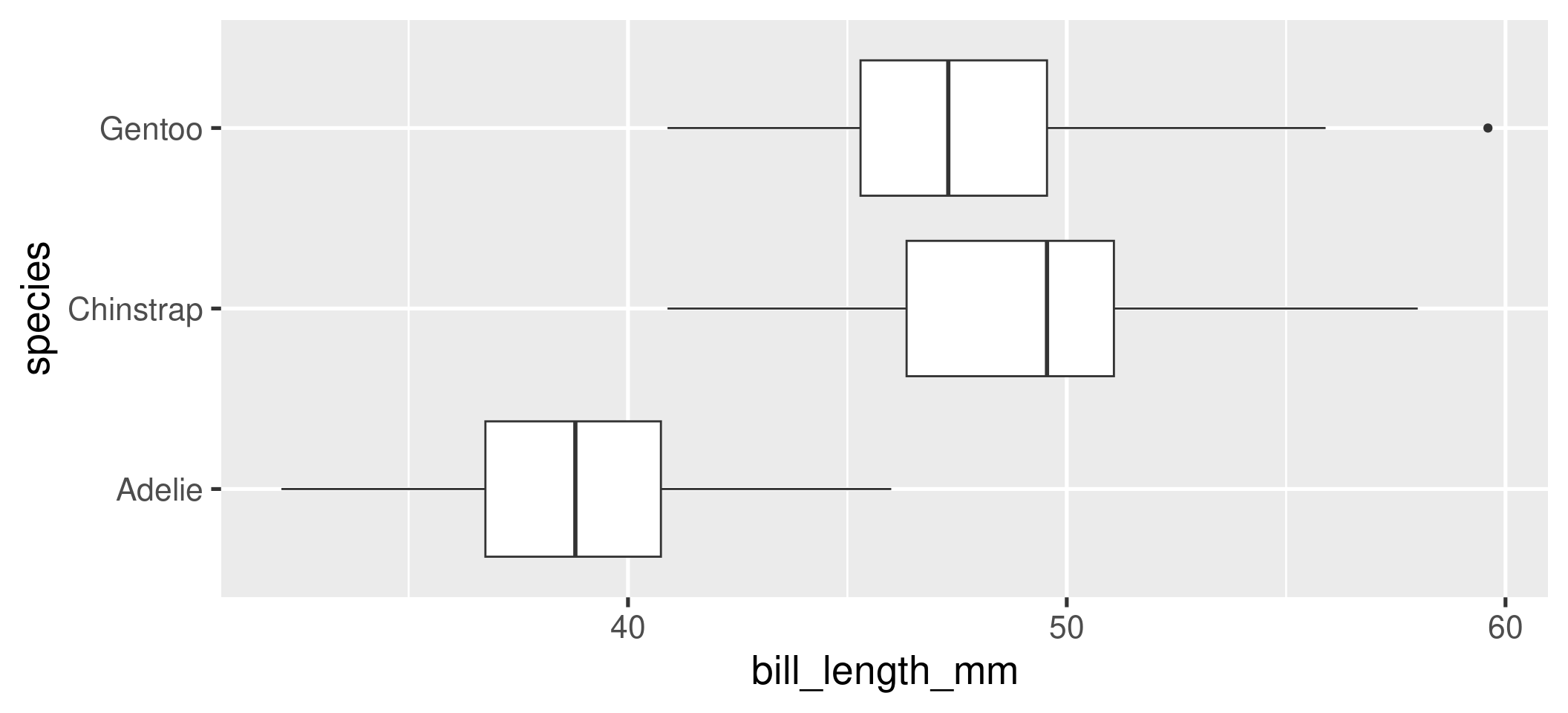
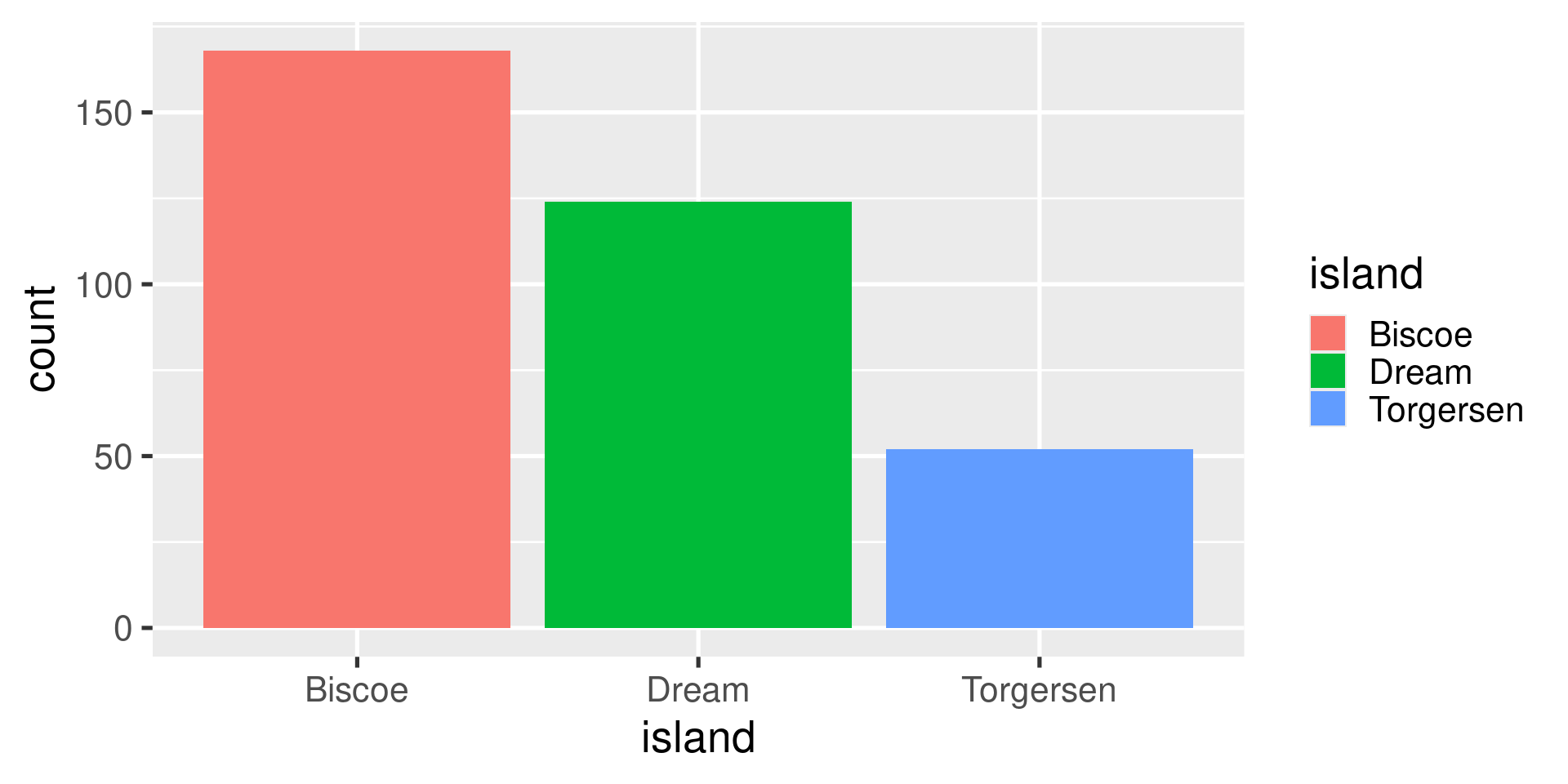
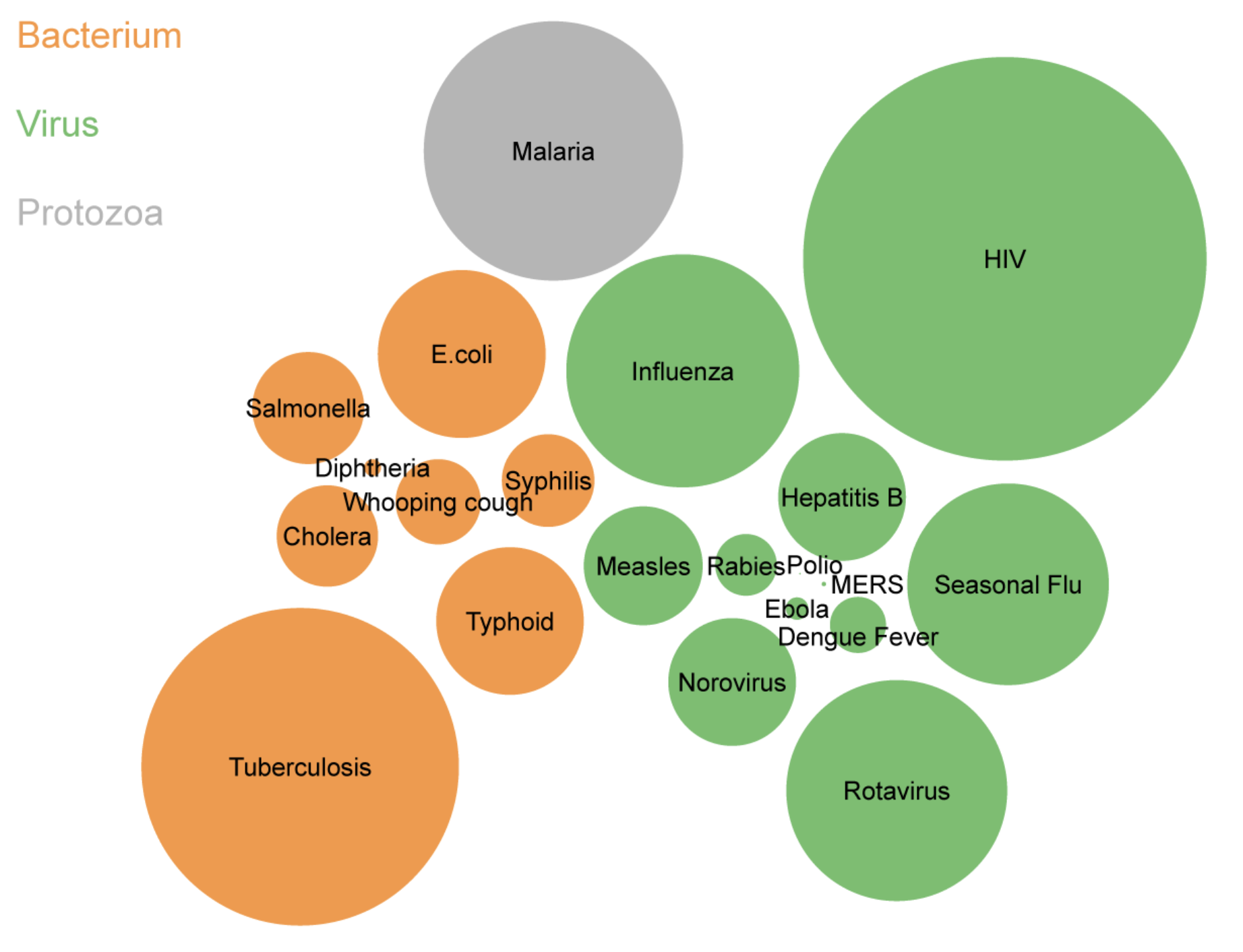
  1. What are the aesthetics and geometry of this plot?
01:00

What code was used to make this plot?

01:00

Concept Activity

Concept Activity

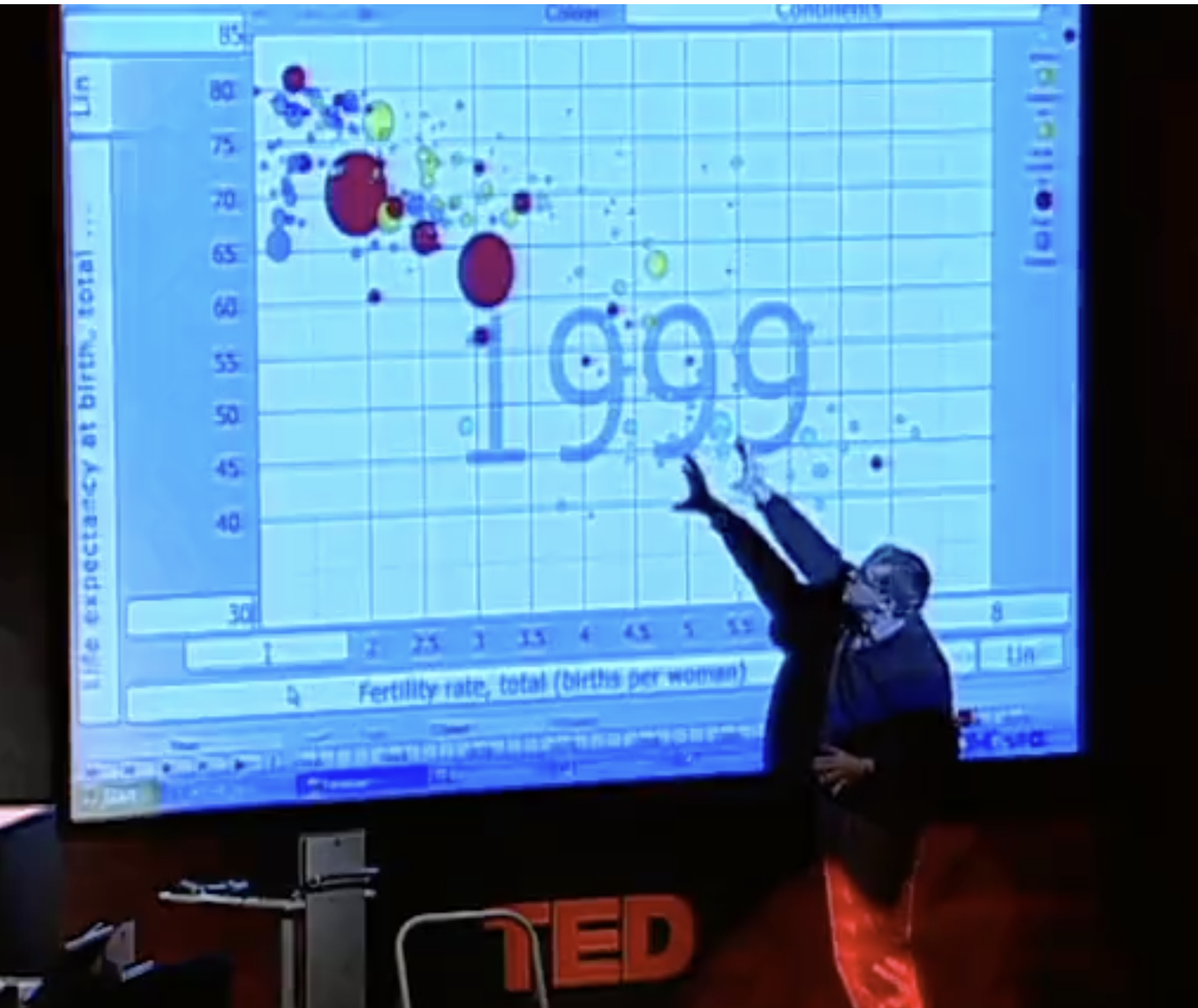
You will be watching a 2.5 minute video of a presentation by a scientist, Hans Rosling, who studied global public health. He presents data visualizations depicting the change in life expectancy and family size over several decades in the 20th century.

On a piece of note paper:

  • Sketch out the data frame used to create the graphic and add the names of the variables.
  • List the aesthetic attributes used to encode the data in the graphic.
  • Identify the geometry used in the plot.

Please turn to your neighbors and…

Discuss what you came up with in terms of . . .

  • the variables present in the data frame
  • the aesthetic attributes used to encode that data in the plot
  • the geometry
01:00

What were the variables and aesthetic attributes?

Visual Cues / Aesthetics

  • Location along the x-axis
  • Location along the y-axis
  • Size of point
  • Color of point
  • Animation

Variables

  • Fertility rate
  • Life expectancy
  • Population
  • Region
  • Year

What did the data frame look like?

What was the unit of observation? What were the variables? What were their type?

Unit of observation

  • A country in a given year

Variables

  • Fertility rate (continuous)
  • Life expectancy (continuous)
  • Population (continuous)
  • Region (nominal)
  • Year (discrete)

What geometry is used to represent the observations?

  • Points

Worksheet: A Grammar of Graphics

25:00